

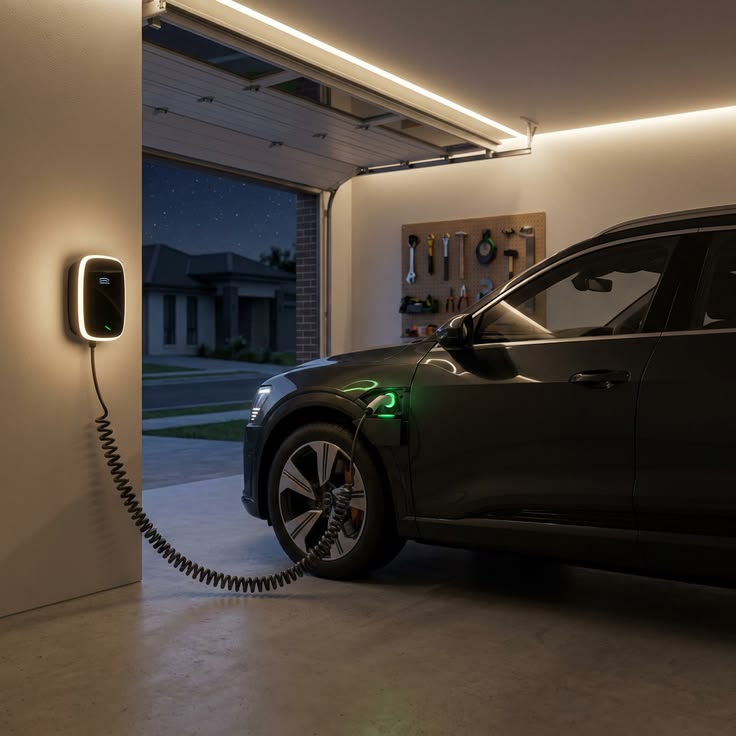
Buying an electric vehicle often leads homeowners to focus immediately on charger speed, features and location. Yet the existing electrical system deserves attention before any equipment is selected. A planned Home EV Charger Installation should take account of the switchboard, household demand, supply arrangement and other high-load appliances already operating at the property. Assessing these factors early can help homeowners choose charging equipment that suits the home rather than simply selecting the most powerful option available.
This becomes increasingly important as homes adopt more electric technology. Air conditioning, induction cooking, heat-pump hot water and future battery systems can all compete for electrical capacity alongside vehicle charging.
Begin With the Way the EV Will Actually Be Used
Charging requirements depend heavily on driving habits.
A homeowner travelling relatively short distances each day may only need to replace a modest amount of energy overnight. Someone commuting much farther could have a very different requirement.
The amount of time the vehicle remains parked also matters. A car connected for ten hours may not need to charge as quickly as one available for only a short period.
Understanding daily kilometres and parking routines provides a better starting point than automatically choosing the highest charging rate.
Review Existing Household Loads
The EV charger will operate alongside everything else in the home.
During an evening, the household may simultaneously use air conditioning, an electric oven, hot-water equipment, lighting and entertainment systems. Pool pumps or other equipment may add further demand.
This does not mean homeowners need to manually calculate every appliance. It does mean the wider household load should be assessed by a suitably qualified professional before the charger design is finalised.
The objective is to understand how the new charging load fits into the electrical system already serving the property.
Check the Switchboard Before Choosing Hardware
Older or heavily modified homes deserve particular attention.
A property may have undergone kitchen renovations, air-conditioning additions or extensions over several decades without the entire electrical setup being reconsidered as one system.
The switchboard may therefore need assessment for condition, available space and suitability for the proposed charging equipment.
Identifying potential work before purchasing a charger gives homeowners a clearer picture of the complete project cost and reduces the likelihood of unexpected changes during installation.
Know When Network-Side Work May Become Relevant
Not every EV charging project requires changes to the incoming electricity connection. However, where authorised service or network-connection work becomes necessary, an appropriately accredited Level 2 Electrician Sydney may need to be involved.
This is different from ordinary electrical work inside the home.
Homeowners should avoid assuming that installing a charger automatically requires a supply upgrade. The existing arrangement first needs professional assessment so any additional work is based on the actual property and proposed load.
Do Not Assume Faster Charging Is Better
High charging power can sound attractive, but it may offer little practical advantage if the vehicle remains parked overnight.
Choosing more charging capacity than the household realistically needs could also influence electrical requirements.
Instead, consider:
-
average daily driving distance;
-
available charging time;
-
the vehicle’s charging capability;
-
other household electrical loads;
-
future EV ownership; and
-
whether daytime charging is possible.
The most suitable charger is one that provides enough energy for normal driving without creating unnecessary complexity.
Consider Solar in the Charging Routine
Homes with rooftop solar may have opportunities to charge an EV using some electricity generated during the day.
This can work particularly well where the car is regularly at home during solar-producing hours. Remote workers, shift workers or households with multiple vehicles may have more flexibility than commuters whose cars are away all day.
Depending on the equipment selected, scheduling or energy-management functions may help coordinate charging with household consumption.
However, homeowners should confirm actual charger capabilities rather than assuming every model offers the same solar-integration features.
Think About a Second EV Before It Arrives
The first electric vehicle may not be the last. A household with two drivers could eventually replace both conventional vehicles with EVs. Parking positions, charger locations and future electrical demand should therefore be considered while the first installation is being planned.
This does not mean installing two chargers immediately.
It may simply mean preserving sensible equipment locations, electrical pathways or switchboard options so that a later upgrade does not require unnecessary rework.
Keep Other Electrification Plans in View
Transport is only one part of the shift toward electric homes. Future renovations may introduce induction cooking, electric heating or cooling, heat-pump hot water and battery storage. Each addition can change the household’s energy profile.
Discussing realistic future plans during the EV charger assessment helps create a more complete picture of potential demand.
The aim is not to overbuild the electrical system today, but to avoid making decisions without considering changes that are already likely.
Conclusion
A successful home EV charging project begins with understanding the property’s electrical system and the driver’s real charging needs. Daily kilometres, parking time, switchboard condition, existing appliances and future electrification can all influence the most practical setup. Homeowners should not assume that the fastest charger or a larger electricity supply is automatically necessary. Instead, the proposed equipment should be matched to the vehicle, household routine and available infrastructure. By assessing these factors before installation and keeping future solar, battery and second-EV plans in view, homeowners can create a charging setup that remains practical as their transport and energy needs evolve.